



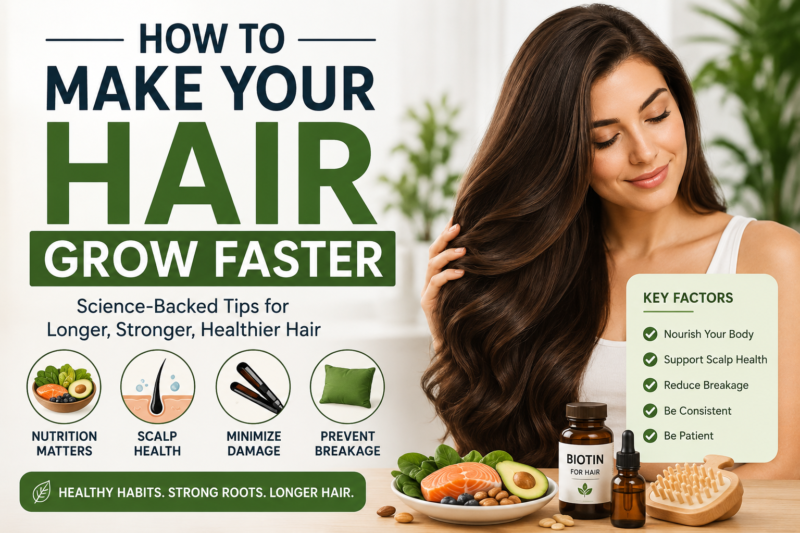
Many people search for ways to grow their hair faster, especially after experiencing thinning, breakage, or a disappointing haircut. While genetics largely determine how quickly your hair can grow, there are proven ways to help your hair reach its maximum growth potential.
The average scalp hair grows about 0.5 inches (1.25 cm) per month. Although no product can magically double this rate overnight, the right combination of nutrition, scalp care, and healthy hair practices can optimize growth while helping you reduce hair breakage. If you’re looking for evidence-based strategies on how to make your hair grow faster, this guide covers everything you need to know.
Eat a Nutrient-Dense, Balanced Diet
Healthy hair starts from within. Hair follicles are among the most metabolically active structures in the body and require a steady supply of nutrients to function properly.
Prioritize Protein Intake
Hair is primarily made of keratin, a structural protein. Inadequate protein intake may contribute to weaker strands and slower growth.
Good protein sources include:
- Eggs
- Fish
- Chicken
- Lean meats
- Greek yogurt
- Beans and lentils
- Tofu and soy products
Focus on Essential Vitamins and Minerals
Several nutrients play important roles in hair growth and follicle health.
Iron
Iron deficiency is one of the most common nutritional causes of hair shedding, especially in women.
Sources include:
- Lean red meat
- Spinach
- Lentils
- Fortified cereals
Zinc
Zinc supports hair follicle repair and growth.
Sources include:
- Pumpkin seeds
- Oysters
- Beef
- Chickpeas
Vitamin D
Low vitamin D levels have been associated with certain forms of hair loss.
Sources include:
- Fatty fish
- Egg yolks
- Fortified dairy products
- Safe sun exposure
Biotin for Hair
Biotin is often marketed as a hair-growth supplement. While biotin deficiency can contribute to hair thinning, most healthy individuals obtain adequate amounts through their diet.
Natural sources of biotin for hair include:
- Eggs
- Nuts
- Seeds
- Salmon
- Sweet potatoes
Consider Supplements Carefully
Supplements should not replace a balanced diet. If you suspect a nutrient deficiency, consult a healthcare professional before starting supplements.
Prioritize Scalp Health
A healthy scalp provides the foundation for healthy hair growth.
Keep Your Scalp Clean
Excess oil, product buildup, and dead skin cells can interfere with optimal scalp function.
To maintain good scalp health:
- Wash according to your hair type.
- Use a gentle shampoo.
- Clarify occasionally if you use heavy styling products.
Try Scalp Massages
Scalp massage may improve blood flow to the scalp and help reduce stress.
To perform a scalp massage:
- Use your fingertips.
- Apply gentle circular motions.
- Massage for 5–10 minutes daily.
While scalp massage won’t create instant growth, it can support a healthy environment for hair follicles.
Manage Scalp Conditions
Conditions such as dandruff, psoriasis, eczema, and seborrheic dermatitis may affect scalp health and should be properly treated.
How to Make Your Hair Grow Faster by Minimizing Damage
One of the biggest obstacles to long hair isn’t slow growth—it’s breakage.
Limit Heat Styling
Frequent use of:
- Flat irons
- Curling irons
- Blow dryers
can weaken the hair shaft over time.
Tips:
- Use lower heat settings.
- Apply a heat protectant.
- Allow hair to air dry when possible.
Reduce Chemical Processing
Repeated exposure to:
- Hair bleach
- Permanent dyes
- Chemical relaxers
- Perm treatments
can damage hair structure and increase breakage.
If you color your hair, consider extending the time between treatments and using conditioning products designed for chemically treated hair.
Be Gentle When Detangling
Wet hair is especially vulnerable.
Best practices include:
- Using a wide-tooth comb.
- Starting from the ends and working upward.
- Avoiding aggressive brushing.
Prevent Breakage at Night
Nighttime habits can significantly impact hair health.
Switch to Satin or Silk Pillowcases
Traditional cotton pillowcases create friction that can lead to tangles and breakage.
Benefits include:
- Reduced friction
- Less frizz
- Better moisture retention
Use Protective Hairstyles
Protective styles can help reduce daily manipulation.
Examples include:
- Loose braids
- Twists
- Low buns
Avoid styles that pull excessively on the scalp, as tension can contribute to hair loss over time.
Avoid Sleeping with Wet Hair
Wet hair is more fragile and prone to damage.
Whenever possible, allow hair to dry before bedtime.
Common Hair Growth Myths Debunked
Hair growth advice is everywhere online, but not all of it is accurate.
Myth #1: Trimming Hair Makes It Grow Faster
False.
Hair grows from follicles beneath the scalp, not from the ends. Trimming removes split ends and helps hair appear healthier, but it does not increase growth speed.
Myth #2: Oils Can Magically Grow Hair Overnight
False.
Some oils may improve hair condition and reduce breakage, but they do not dramatically alter your genetic growth rate.
Myth #3: Brushing Hair 100 Times Daily Stimulates Growth
False.
Excessive brushing may actually cause mechanical damage and breakage.
Myth #4: More Shampoo Causes Hair Loss
Generally false.
Appropriate cleansing helps maintain scalp health. Hair shedding seen during washing is often hair that was already in the shedding phase.
When to See a Professional
Sometimes hair growth concerns require medical evaluation.
Consult a dermatologist if you experience:
- Sudden hair loss
- Rapid thinning
- Bald patches
- Excessive shedding
- Scalp pain or inflammation
- Hair loss accompanied by fatigue or other symptoms
A dermatologist may evaluate for:
- Iron deficiency
- Thyroid disorders
- Hormonal imbalances
- Autoimmune conditions
- Genetic hair loss
Early diagnosis often leads to better treatment outcomes.
Conclusion
Learning how to make your hair grow faster is less about finding a miracle product and more about creating the ideal conditions for healthy growth. A nutrient-rich diet, good scalp health, gentle hair care habits, and strategies to reduce hair breakage can help your hair reach its natural potential.
Consistency is key. Healthy hair growth takes time, but small daily habits can make a significant difference over the long term. Focus on supporting your body’s natural growth process, and you’ll be giving your hair the best chance to grow stronger, healthier, and longer.
Medical Disclaimer
This article is for educational purposes only and does not replace professional medical advice. If you are experiencing sudden, severe, or persistent hair loss, consult a qualified healthcare provider or dermatologist for proper evaluation and treatment.
